


A few months ago we had a series of baffling conversations with a major US retailer about the positioning of Hot Wax.1 This particular retailer put the book on one of their big “best of” lists for the end of 2025, which ordinarily would be great news. Problem was, they had it listed as “horror.” Why is that a problem? Because it’s not horror. Not even close. Hot Wax is pretty solidly upmarket; it’s a road trip novel about a disastrous concert tour in the summer of 1989 and while it does it get pretty gory and deals with some very adult themes, no sane person would read it and say, “Yep, that belongs on the horror shelf.” And yet, one of the biggest booksellers in the country did. What’s even crazier is that they doubled down on this decision after we pushed back.
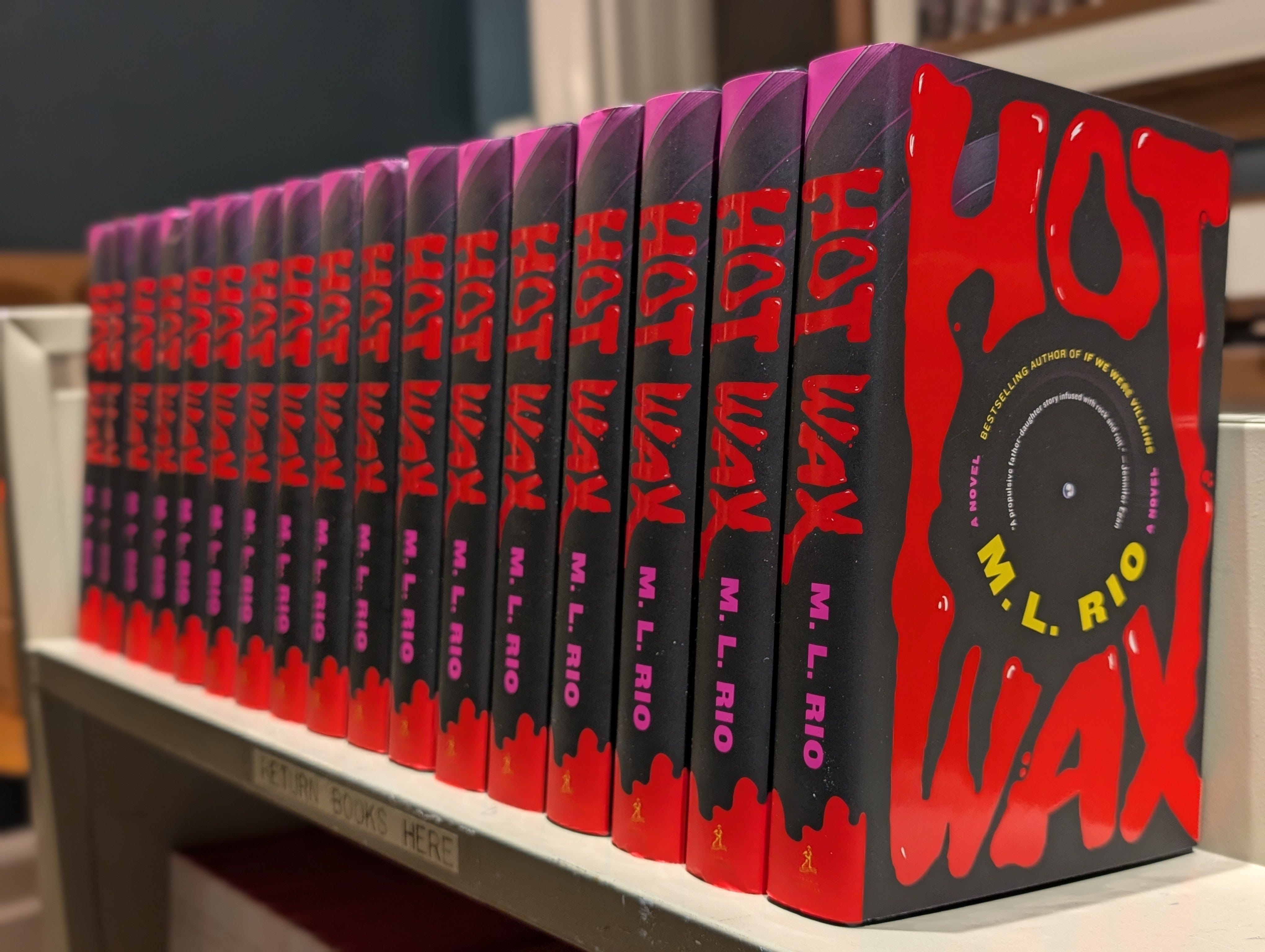
We didn’t want the book shelved wrong for a lot of reasons, but the biggest one is that by putting it in the wrong place and calling it the wrong thing you’re selling it to the wrong readers. Folks who want true-blue horror? Hot Wax is not for them, and boy, have they let me know it! After this list came out, it had an appreciable impact on reviews and ratings. People complaining, “This is supposed to be horror?” and me on the other end of the screen, silently screaming, NO! IT’S NOT! to absolutely no avail. I knew this would happen. So did my publisher. We made our case that this gambit would hurt us and the book’s chances in the long run — not just because of one list, but because the rest of the internet and the book-buying public tends to regurgitate shelfmarks and hashtags and whatnot posted by the biggest booksellers in the country, even when the official BISAC codes for the book say nothing about horror at all.
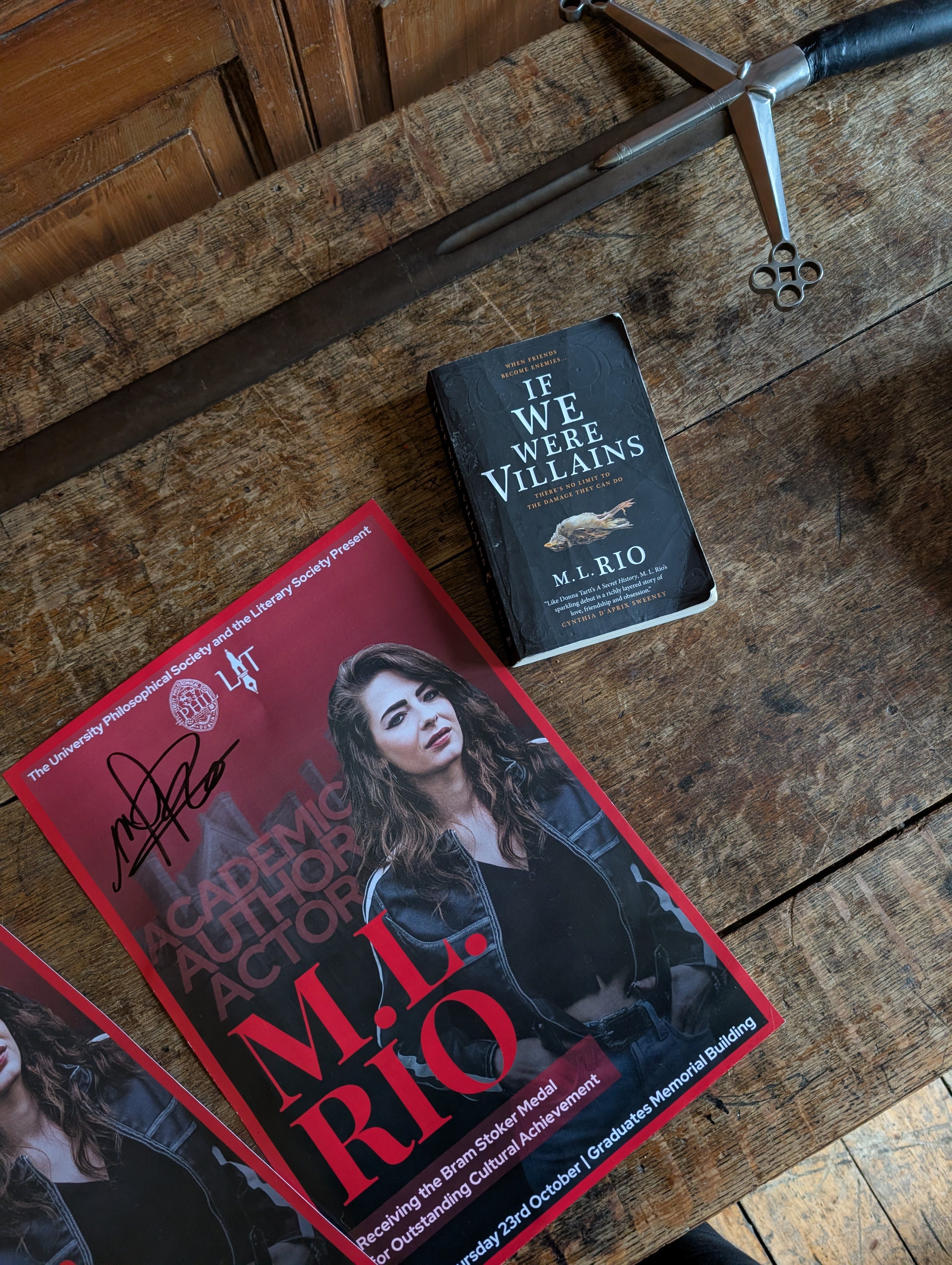
I knew this would happen because I experienced something similar with my first novel, If We Were Villains. My publisher insisted on calling it a “literary thriller” and stores insisted on calling it “mystery” even though it isn’t supposed to be either of those things. It’s not a whodunit and it’s fairly slow-paced; folks looking for those kinds of books didn’t like it and it wasn’t until three years later that the people whom it was actually for found it on their own. All my objections to this positioning were overruled on the grounds that I was young and didn’t know the market well. But I did know my own book. I knew it better than anyone. I knew who was going to enjoy it, and people looking for more traditional mysteries and thrillers weren’t it. This is the argument I made against calling Hot Wax horror. It fell on deaf ears, and now this has gone on so long that there’s no putting the toothpaste back in the tube. People are going to continue mis-shelving and misreading it as a terrible attempt at something it was never supposed to be.
So what exactly was the rationale behind this decision and the refusal to change position over the publisher’s and the author’s vociferous objections? Two things: one spoken, the other not. The first defense was that they “wanted to keep all my books together in the store so they’re easy to find” and Graveyard Shift got shelved as horror in 2024. This, however, is nonsense! They already shelve Villains separately (in mystery2). The second, unspoken reason is that horror is a hot genre and they simply thought they could sell more copies by calling it that. What doesn’t rate any consideration is whether deliberately misleading readers hurts them, me, my sales, and my readership in the long run. This is my problem to solve now, but my reach is a whole hell of a lot shorter.
Apart from the fact that it’s exhausting to try to course-correct this every day and wonder all the while how many sales and readers I’m losing because of it, what really makes me crazy about this is that it is a fake problem. There is an easy, blindingly obvious solution:
JUST PUT IT IN THE FUCKING FICTION SECTION.
Listen, you want my books to be side-by-side so readers can find them easily? I get that! I would like that, too! But if it means shelving all of them but one in the wrong place? Pardon my French, but that doesn’t make any damn sense.
The funny part of this story is that back when I was a little rat writer juggling four jobs, I worked for this particular retailer as a bookseller. I know exactly how their shelving system works. And I also know how much of the storefront — both digital and IRL — is just “fiction.” Not horror, not mystery, not anything else, just general fiction. But it feels increasingly like booksellers, publishers, and even readers are allergic to it. It’s no great mystery why.
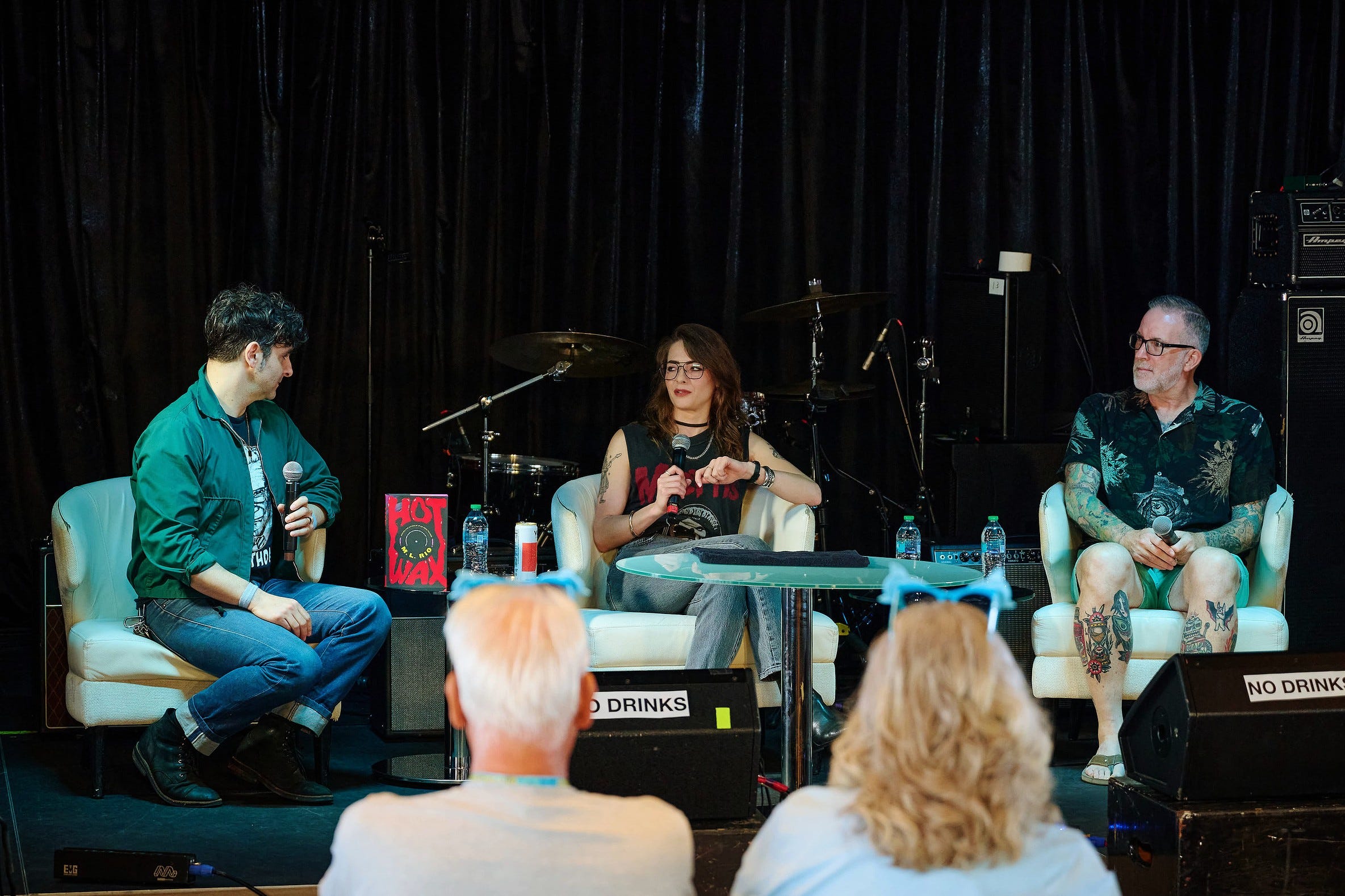
This past week, I had a chance to hawk books to exactly the sort of people who might enjoy Hot Wax: a bunch of punks on a boat for Little Steven’s Underground Garage cruise. I did a panel with Low Cut Connie frontman Adam Weiner and the great Jim Ruland (who wrote a terrific post about it) where we talked a lot about the arts and what it takes to succeed as a writer or a rocker in 2026. And one thing we talked about a lot was genre.
If you saw me on tour, you probably also heard me talk about this, but we’re in an era of what I like to call “extreme niche-ification” in the media landscape. Since social media completely remade the arts marketplace — I’ve worked in publishing since 2014 and the arts much longer than that, so I’ve watched this happen in real time — there has been a seemingly infinite proliferation of sub-genres. We no longer have just “horror,” for instance, but something as specific as “sporror,” or horror about fungus. We no longer have just “dark academia” (which wasn’t a thing back in 2014; we just called them campus novels) but “light academia” and “gray academia” and increasingly hairsplitting distinctions that get so particular they read like parody. This is an obvious outgrowth of both the globalizing effect of social media and the extreme commodification of the arts under late-stage capitalism. People are overwhelmed by the tyranny of choice and so naturally gravitate towards what they already know they like. Corporations with something to sell encourage and enable this by selling art like cleaning products: Does what it says on the tin. It’s great for readers to be able to find the books they want to read. What’s no so great is the siloing effect that flows south from this desire to never, ever leave our comfort zones and the market reshaping itself to cash in and entrench that mentality. If you’re selling books in the wrong genre on purpose because that genre is hot, you have lost the entire fucking plot.
Besides my own personal beef, here’s why this isn’t so great: If we deforest the general fiction section and force everything that used to go there into other categories, two things happen, and they’re both bad. The first is that critical thinking and critical reading continue to go the way of the dinosaurs as readers only encounter the same tropes over and over and over again and lose their ability to engage with anything that doesn’t fit within those parameters (witness the disturbing rise of readers who don’t understand that depiction isn’t endorsement, that a first-person narrator is not the same person as the writer, or what “autofiction” actually is). The second is that writers get siloed along with their books, all in the name of marketability.
I wanted to be a writer from the time I was six years old and won the Young Writers & Illustrators contest and Read-a-Roo came to my school and gave me a balloon and a T-shirt (which I still wear). Most of my earliest stories were about animals, because that’s what I was interested in in first grade. At twelve I started my first “novel,” which was a hilarious attempt by a very young person to write something like crime or mystery. I finished it when I was fourteen and thankfully knew it was not very good, but I did write about a book a year every year after that. I wrote a fantasy novel in high school. I wrote a novel about the Napoleonic Wars in college (really). I wrote something about body-snatching in Victorian Edinburgh in graduate school. I wrote a sci-fi novel I can never publish now about a deranged billionaire and the Mars landing during the pandemic (lol). What I never did was imagine myself writing only one genre for the rest of my life. And that has made my life as a writer so. Much. Harder.
Some of this is the dark side of success. Publishing loves a sure thing, so when my first novel did find its people and start selling like gangbusters, all anyone wanted was more of the same, and the fact that I was ten years older and a very different person who never wanted to write campus novels forever and had never heard of “dark academia” did not matter at all. Almost every conversation I had in trying (for almost ten years!) to sell Hot Wax went along the lines of “But can’t it just be more like Villains? Somehow? Please?” In some ways, Graveyard Shift was me throwing the industry a bone: it wasn’t a traditional campus novel, but it had enough familiar elements that I knew people would be willing to follow me there. It worked like a charm. But guess what? Because it did now everybody in the business just wants me to do more of that.
Is this flattering on some level? Sure. Is it also infuriating? You bet.
If some part of you is over there thinking “Shut up and be grateful!” — I get it. This business is so hard and so many people would kill for a chance to have anything hit that it can be tough hear an author who’s had some success turn around and bitch about it. However, trust that this comes less from a place of Ugh, just let me do what I want, and instead from a real concern that this trend is eventually going to leave no seat at the table for writers and artists and thinkers who can’t fit their work into neat little boxes with neat little labels that corporate overlords can leverage and TikTok can turn into hashtags (Do we even use hashtags on TikTok? I’m too old to know). I’m halfway through a new novel that I’m so excited about and my God, the research is heroic, and the story feels so worth telling, but every day I work on it some part of me wonders if there’s any point because how am I possibly going to get retailers (and by extension, readers) on board with a book about industry and labor politics set in 1947 when all anybody wants me to do now is horror and maybe they’ll just call it that anyway? I know I’m not the only author who feels this way. More and more of us are seeing the range of what we can realistically expect to sell shrink to a margin of inches.
It doesn’t need to be this way. At the same time we’re experiencing this extreme niche-ification, social media has also engendered an era of book marketing that depends on the cult of personality as much as anything else. Authors are, in many instances, expected to do the lion’s share of promotion from their personal accounts, to make as many in-person appearances as possible whether the publisher funds them or not, to put their faces on everything in an effort to please the algorithm. We’re doing away with blurbs on book jackets and going back to full-bleed author photos. With so much emphasis on The Author as product, you’d think we could find a better way to sell their writing, not their genre.
In the midst of second-guessing myself and whether this new project will amount to a waste of effort when nobody reads it because we can’t sell it because the market won’t know where to put it, I had breakfast with my publicist — who is, of course, the market expert in my corner. After chewing on the problem myself for six weeks of residencies I blurted at her, “Do you think we can just call me a crime writer?” If that’s what I am, I’m an unconventional one, to be sure, but it was the only through-line in my work I could find that’s easily reduced to a soundbite. As terminology goes, it’s a little old-fashioned, but it seems truest to what I’m interested in: the murk of human morality. My publicist agreed, that might be a useful pivot in the coming years. If you have to pigeon-hole yourself to make a living, you find a hole you can live in.
That said, “crime” isn’t really what defines me as a writer. Those things are harder to put fingers on, but the handful of readers who’ve read all my stuff (and not hated it for not being one thing or the other) will know what they are: I write large casts of messy queers with deplorable morals and mouths full of fast, snappy dialogue; I write about performance of all shapes and sizes; I write deeply researched, immersive worlds you should be able to lose yourself in for a while; I write with an abiding interest in the human body; I let the subtext do a lot of heavy lifting and tend to leave my endings open to interpretation. Those are things you can’t learn from a shelfmark. When my editor first signed me — the only editor of the bunch who loved Hot Wax for what it was and didn’t want to turn into something else — he said, “I just want it to feel like an M. L. Rio book.” That’s what I want, too. And the kicker is, I think that’s what readers actually want — at least, the ones who want to read deeply and read widely and not read the same thing over and over again. But the market is getting to be so narrow-minded that I’m starting to feel like I can’t really write like myself if I want to keep making a living.
I’ll be the first to admit: I don’t know what the solution is here. Apart from a dramatic sea change in the industry, I don’t see this problem going away unless we talk about it more. Otherwise, I wouldn’t be surprised if ten years from now there was no “general fiction” section at all. It would be a great loss. Most of the best books I’ve ever read I stumbled on in those aisles, intrigued by a title or the back of a jacket that promised a good story by an interesting writer. I rarely thought about genre, and I definitely didn’t stand there wondering whether the book in my hands would satisfy my checklist of tropes or tailor itself to my favorite “aesthetic.” This is probably why I’m such an omnivorous writer. Reading widely — across time, culture, and, yes, genre — exposes you to all the amazing things you can do with fiction. There’s a reason we emphasize general education. A varied diet is a healthy one. And I can’t help thinking that we’re starving our readers and writers with what amounts to a literary juice cleanse.
So that’s it! That’s the Friday rant. Let the readers eat.
Which is, for some reason unbeknownst to me, $2.99 as an ebook today).
Even though I’ve never seen any other campus novels shelved there. Why we’re still doing this with IWWV I don’t know, except that it came out years before the big boom and nobody moved it. I’ve tried.
Really well thought out, ML, and as you suggest a bigger problem than most recognize. I think this is part of the reason why more readers and writers are turning to independent publishers as places that champion difficult-to-classify books. But not always. When my new novel was out on submission I heard from one prominent indie publisher of crime fiction who said that it's not the kind of crime fiction they publish anymore. What? So that nichefication exists, even when it's not explicit.
Maybe it's a topic for a different discussion but when I see the kind of thing that's being made into film and TV (especially on the streamers) this genre-straddling doesn't seem to be an obstacle. Bottom line, when publishers try to play it safe everyone loses.
Thanks for the shout out and hope we get to do another event together soon!
This happened to me once on a project (not a novel, but a scripted podcast), and it took me so long to take a deep breath and understand that part of the reason it failed was because it was so terribly mislabeled. My mantra had to become "it's not a failure, it just didn't find its ideal audience." I wrote a dark and twisted comedy satirizing the rom-com and it was being peddled to listeners as, simply ----- a romance. I was asked to make an ongoing series, the people who consumed it thought it was supposed to be close-ended, like a book. I ended on a cliff-hanger and more than half of the one star reviews are people rioting against that, wanting more (which was by design!), but of course it performed so poorly I wasn't given that chance. It was so painful and maddening. Anyways, fast forward three years and I'm about a week away from being out on sub with my debut novel, which is also pretty genre agnostic and hard to niche-genre label, and God this article slapped for me. You have me PRAYING it's simply considered a work of fiction. I shudder to think where it might land if someone tries to pigeon hole it.