


On the last day of my six weeks of winter residencies I realized I had to throw out most of the 70,000 words I’d spent those six weeks writing. This is not the revelation that you want to have on March 9 when you’re supposed to have a draft done by March 31 and the whole thing is due in June.
I had a day to pack up and drive home and I gave myself those hours on the road to do nothing but think — about why the draft wasn’t working and whether I could salvage some of what I’d done. The longer I thought about it the surer I was that the only way forward was actually backward. Nothing I unloaded from the car was as heavy as the truth that no, I didn’t get to take a break and get my life back in order; I had to go back to the drawing board and rewrite the whole draft with six weeks fewer on the clock to do it.
Why, though? What went so wrong with a manuscript that seemed to be going so well that at exactly the halfway mark I knew it couldn’t be saved?
A couple of things. Mostly the same thing that goes wrong with all of my novels at some point. Somewhere in the middle, first drafts just kind of get away from me. I don’t know how else to describe this. Partway through the process, no matter how thorough my outline, the story just won’t hang together and in all my desperate efforts to make it work the draft gets convoluted and unwieldy. Usually, it’s because there’s a sticking point somewhere, a problem that I haven’t yet solved that’s starting to get in the way.
The other problem is this: when I’m chewing on a new idea, and especially one like this which is so research-intensive, I can’t help wanting to do it all! Use every detail, deploy every fact, overdo the world-building just because I want it to feel as real to the reader as it does to me. That’s how you end up halfway through a draft of something that’s only supposed to be 90,000 words and you’ve already done 70k.
Overwriting is a chronic issue for me. My process is one of distillation: I have to start with the macrocosm and reduce it down to something representative of the larger whole; fiction as synecdoche, if you will. With something like Hot Wax where the whole idea was for it to be epic in scope and maximalist in style, that worked. The fact that I was doing it for the better part of a decade helped, too. But when I sat down to talk to my editorial team about what we wanted for the next thing, everyone agreed something shorter, sharper, and not ten years in the making was the move.
Writing the Right Book

Maybe it’s ridiculous to even think about fiction right now. The White House is orange again, AI has its tentacles wrapped around our collective throat, California is still on fire, and I just told my accountant I’m not worried about retirement because I don’t like my odds of living that long. But still I think about fiction. If anything I think even mo…
Ironically, easier said than done, and I’ve made this no easier on myself by diving into the sort of subject matter that has me reading 800-page monographs with titles like Arsenal of World War II: The Political Economy of American Warfare 1940-1945. There simply is no way to skim that sort of thing, but when you’re writing fiction, you have to be a little more economical with information. 70,000 words is too much for half a novel — even if it’s just the first draft. Stopping to take stock made me realize that if I continued plowing ahead, I’d be in for a world of hurt even if I could get to the end of the draft.
It happens to every writer at some point: you realize the thing you’re making can’t be saved, or not in its current form. It’s devastating every time, which is why a lot of young writers are so hostile to revision and so averse to making major changes to work they consider “done.” But — as Amy Lyons and I found ourselves commiserating about over the weekend — that’s really what the work is. It’s not the final draft; it’s the willingness to write the same story over and over until you find the right way to tell it. Writing 70,000 words the wrong way isn’t actually a total waste of time. Much like Thomas Edison discovering a thousand ways not to make a light bulb before finding one that worked, writing 70k of the wrong manuscript might be the thing that helps your find your way into the right one.
So yes. I threw out most of six weeks of work. I’m not mad about it.
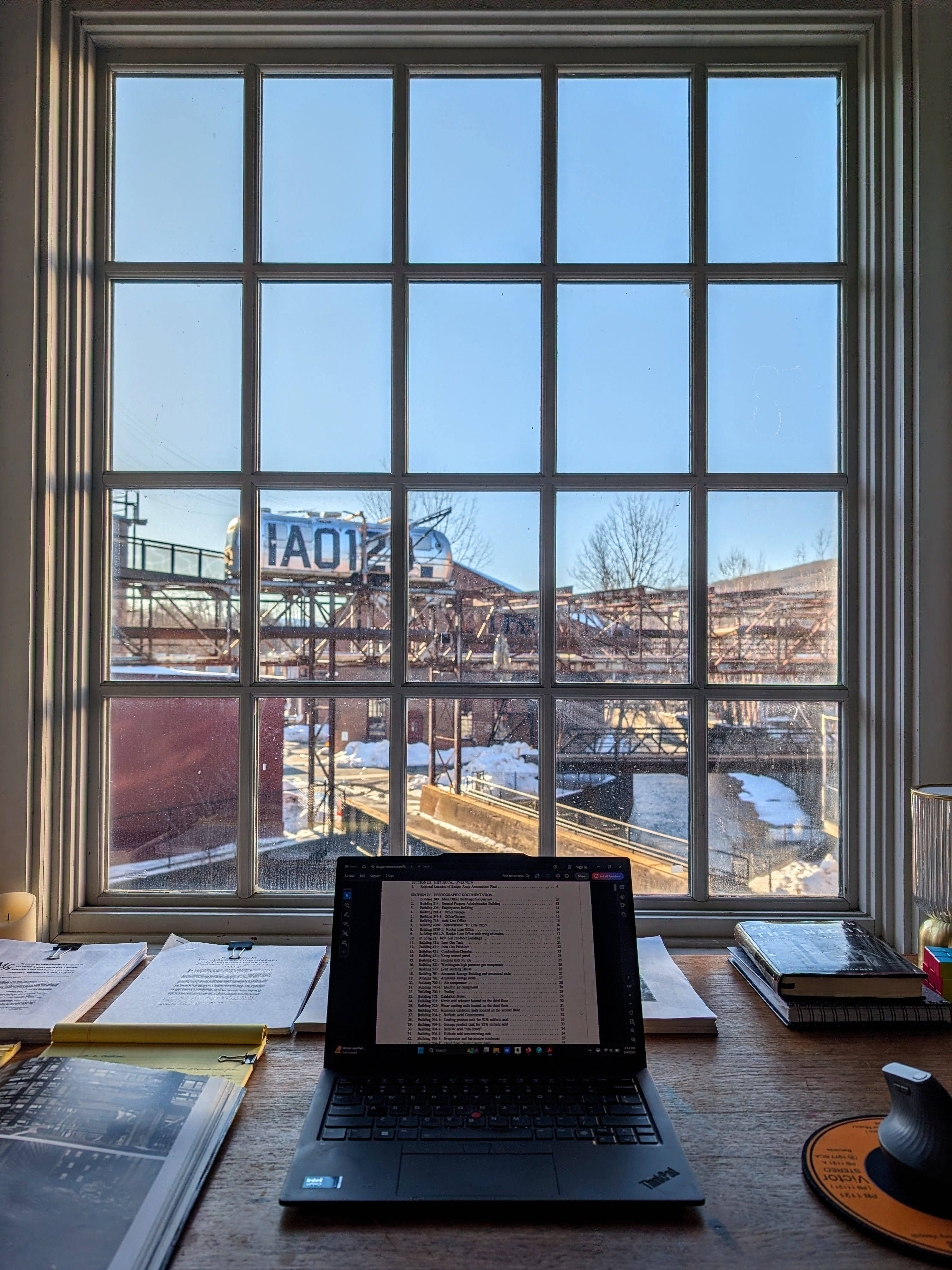
If anything it was a wake-up call, a nudge from the muse or the universe to steer myself out of the weeds and back to what made me want to write this thing in the first place. In all the research I’ve done, there’s a little research corner I’ve been avoiding because the work there is going to be depressing and difficult and take me farther out of my creative comfort zone than I’m accustomed to; because I’ve been subconsciously dodging it, I’ve also been subconsciously writing around it, and so the story was going in circles, chasing its tail, ignoring the elephant in the room, and getting much too long as a result. Last week I hit a wall where that gap in the research simply couldn’t be avoided anymore.
What’s interesting is that what I’ve been avoiding is also what made me want to write the book in the first place, which seems counter-intuitive until you consider the stakes. Yes, this is why I wanted to write this. But also, oh no, this is why I wanted to write this and it’s going to be really hard and the pressure to get it right is really on. It’s daunting because it’s important, technically and thematically. The stuff that excites also, inevitably, intimidates. Admitting this to myself was step one. Okay, you fucked up. It’s going to be messy and painful but you don’t have time to wallow so go back to square one and solve it. Re-center the stuff that matters, no matter how tough, and cut the bullshit. You’ve got 70,000 words to spare.
Cutting the bullshit and getting to the quick is a big part of it. Because my Achilles heel as a writer is always doing too much at once, the first question I ask when things aren’t hanging together is where can I reduce, combine, collapse? Where can I elide plot points or let one character play multiple roles? Can this transition become a fast curtain, is there a shorter way to go for this particular ham sandwich? This simplifying mindset is especially key for a novel that takes place in a claustrophobic noiriverse characterized by low budgets, studio backlots, small casts, dark interiors, stark lighting. To let it get too capacious would be a betrayal of the genre, and I was feeling that, too, in this big wrong draft: just like the structure was collapsing under its own weight, so was the style. And in the world of noir, style is everything.
This sort of misalignment is a little inevitable, I think, when taking on a creative project this large in such a (comparatively) small space of time. There are only so many things you can hold in your mind at once, and when you’re absorbed in the fine minutiae of prose, it’s surprisingly easy to lose sight of the big picture. You can’t see Manhattan from New York City.
In my last craft post I talked a little bit about how the academic-literary establishment tends to fetishize voice and vilify plot and how sacrificing structure on the altar of style is an ultimately self-defeating exercise. This happens because we’re all unavoidably influenced by a creative-industrial complex that valorizes morning pages, word sprints, subscriber counts, charts and graphs and time to earn out, writing a whole novel in a month! Trouble is, you really can’t write a novel in a month of 1,667 words a day unless you’re only thinking of the words, and as much as we love words a novel is a lot more than that. These past six weeks, I got so lost in the sauce of the prose that the organizing principles, the primary movers of the whole work, fell by the wayside. I was moving so fast I started to miss the forest for the trees.
Outlining 101: organizing principles

I’ve had a lot of conversations with writers and readers lately about structure. In last month’s craft survey, outlining was also the winner in the vote for what you wanted to see here next. I love that everyone wants to talk about this, because outlining—
The good news is I caught it early. This would have been a much bigger knot to untangle were I just realizing this another six weeks from now. The good news is it’s not all bad. Reading back through what I’ve got, I can keep about half and move forward from there with a better sense of where I’m coming from, where I’m going, and why. The writing journey continues to be rocky, unpredictable, and completely nonlinear, but snags like this are good reminders not to get too far ahead of myself, to check back early and often with the So what? of it all, and to remember that productivity for its own sake is the enemy of good art. We’re not here just to say words; the words have to matter.
In the long arc of an artistic career, you’ll revise your practice as much as your prose. I’ve been writing and publishing for ten years but nothing is set in stone. Writing a whole book on a deadline this tight is a new challenge for me; I’m making this up as I go and getting better at it along the way. This spring I’m learning to stop, take stock, and reevaluate often, even when I’m on the clock. What am I writing, how am I writing, and — most importantly — why?
courage! you're the hardest working writer i know
In the middle of revising (rewriting) my first novel for the third time. I needed to read this today. Thanks.